
Cell
One welding or cutting cell or line, one agent scope, one number to prove. The entry point, and the honest way to test a claim.
Weldeon is packaged the way fabricators actually adopt automation: prove it on one cell, run it across the shop, then standardise it across the group.
Not by feature gating for its own sake — by the scope of the shop the platform is allowed to act on.
One welding or cutting cell or line, one agent scope, one number to prove. The entry point, and the honest way to test a claim.
The whole shop under one loop: cut, form, fit-up, tack, weld, distortion, defect, yield, robots and the twin.
Multiple sites under one standard, with custom material, joint and code models and a managed edge fleet.
The Cell product exists to answer one question honestly: does autonomy move the metric on your worst station?
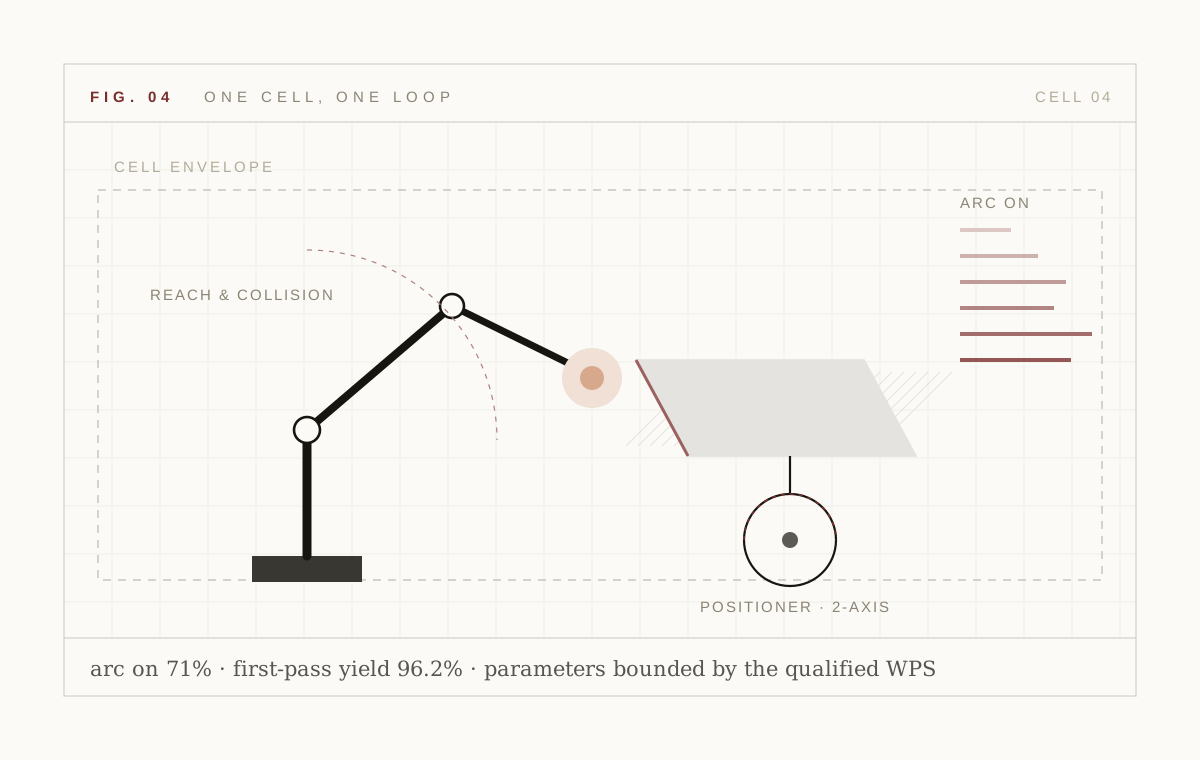
Choose the workflow attached to your most expensive line — rework labour, scrap, NDT re-inspection, lost takt, or scarce welder hours. Weldeon instruments it, baselines it, and runs supervised autonomy against a scorecard you agree before we begin.
A cell proves the claim. A shop realises the value — because yield, distortion and takt are shop-level properties, not cell-level ones.
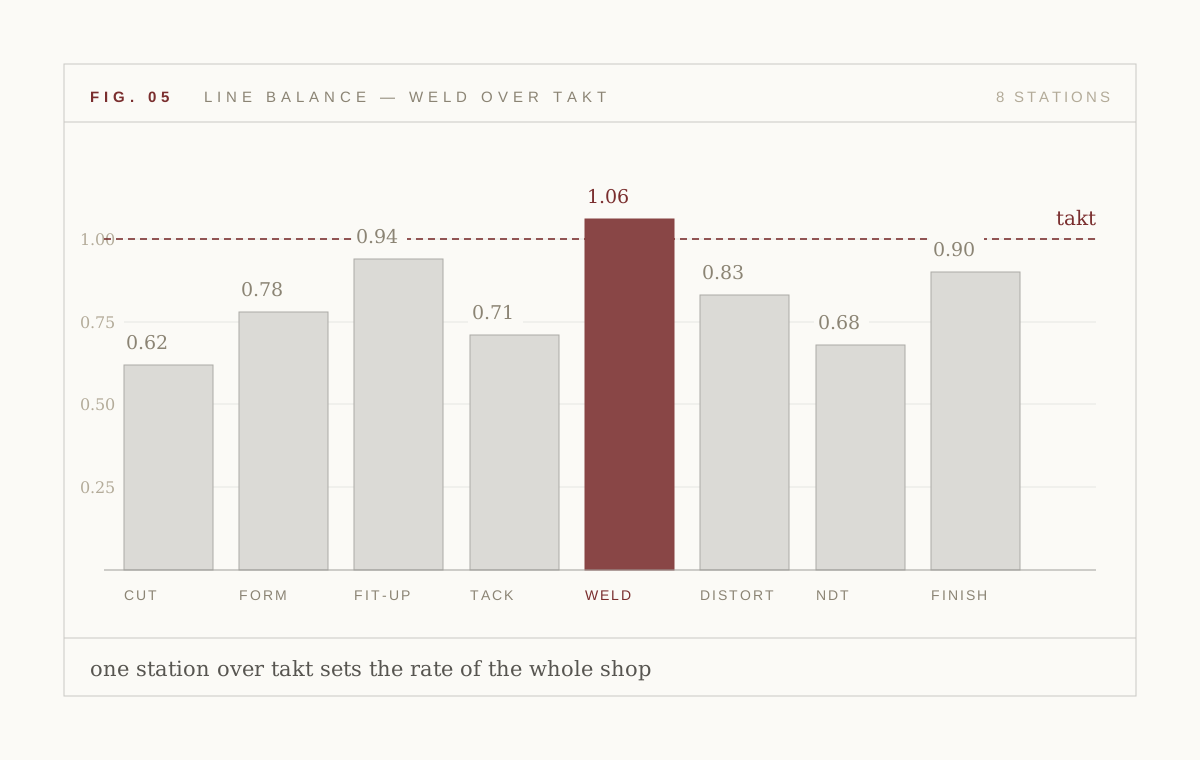
With the full loop deployed, the twin plans sequence for the whole assembly, the fit-up agent's measurements inform the weld agent's parameters, and the yield agent can finally attribute a rework hour to the station that caused it.
For groups, the value is consistency: the same weld, the same record and the same evidence at every site you own.
Custom material, joint and code models are trained on your portfolio. The edge fleet is version-pinned and staged. Benchmarks let a group quality director compare sites on first-pass yield with the same definition behind the number.
The full matrix, without the asterisks.
Available across all three products; scope is what differs.
Controls plasma, laser and oxy cutting, nesting, bending and forming so plate and sections leave the front of the shop at the geometry the joint actually needs.
Senses and controls root gap, alignment, bevel and tack placement — the single largest upstream cause of weld failure and rework.
Runs robotic arc, laser and resistance welding: heat input, travel speed, wire feed, weave and real-time seam tracking, pass by pass.
Plans weld sequence, balances heat, and predicts out-of-plane distortion and residual stress before the assembly leaves tolerance.
Reads X-ray, ultrasonic and vision data to detect and predict porosity, cracks, lack of fusion, undercut and slag — machine-read, engineer-approved.
Optimises first-pass yield, rework hours and line balance across cutting, fitting, welding and finishing stations.
Drives welding robots, positioners, gantries and part handling — including approach, reach and collision-free motion around large weldments.
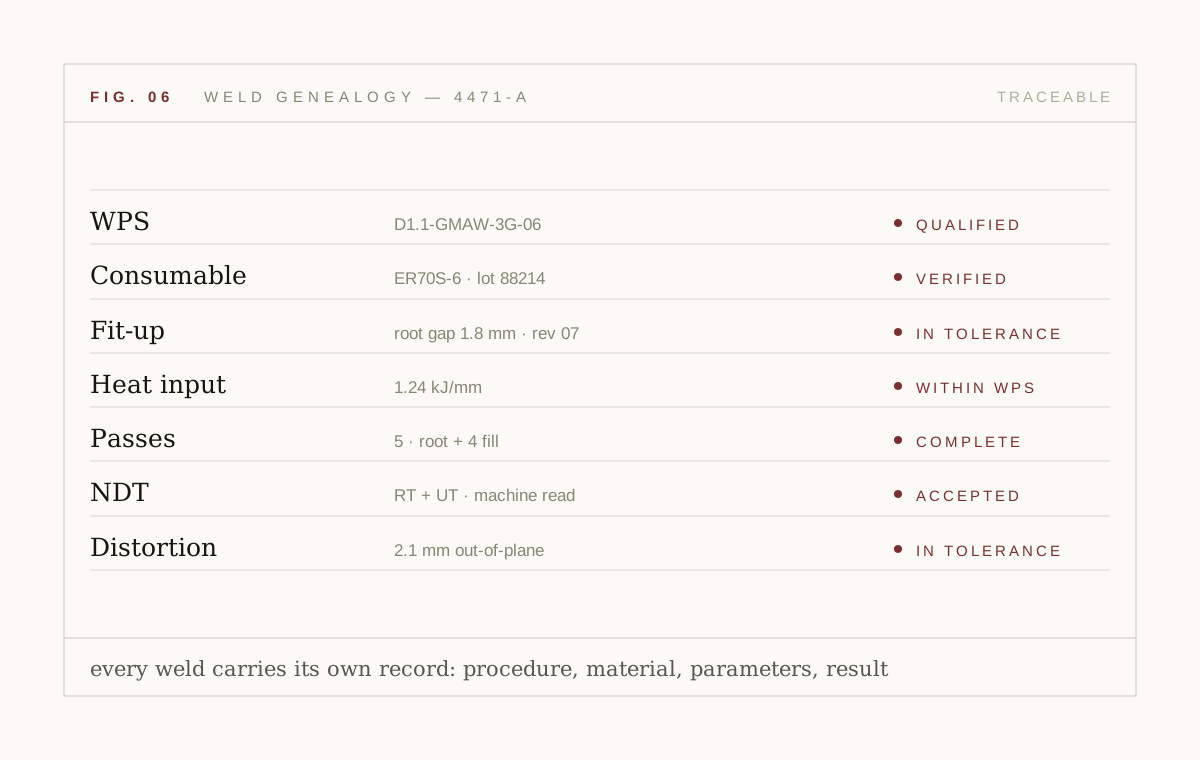
Holds right-first-time, non-conformance, weld genealogy and code traceability to AWS D1.1, ASME BPVC, ISO 3834 and EN 1090.
1
cell in the pilot — the wedge, chosen for ROI clarity
3–5
design partners Weldeon is recruiting for paid pilots
135%
target net revenue retention as shops expand by cell and module
78%
target gross margin at scale
Retention and margin figures are Weldeon's operating targets, not reported results.
“Buy the smallest thing that can prove the claim. Then buy the loop.”
Land low-friction on one workflow; expand by cells, lines, modules and sites.
Cell
$15,000per welding or cutting cell / line, per month
For fabricators validating ROI on the wedge.
Factory · Recommended
$95,000per shop, per month
For scaling shops adopting the full loop.
Enterprise
Customtypically $700k–$9M ACV
For fabrication and OEM groups standardising on Weldeon.
Annual prepay carries a 15–20% discount. Outcome-based components are available on yield, rework, defect escapes and first-pass yield.
Yes. Many shops run two or three cells before moving to Factory. The Factory plan becomes the better economics somewhere around five to six cells, and it unlocks shop-level attribution that per-cell deployments cannot produce.
No. The twin is how the platform reasons; it is included wherever the platform acts. On the Cell plan it is scoped to the pilot assemblies.
Usage metering above plan limits applies per weld, per cell or per action depending on the workflow. It is defined in the order form, not discovered on the invoice.
Book a pilot on one cell or line. We agree the scorecard before we start — first-pass yield, rework hours, defect escapes, takt — and we report against it in the open.